

Decoding Sustainable Textile Certifications: A Guide for Eco-Conscious Brands

Decoding Sustainable Textile Certifications: A Guide for Eco-Conscious Brands
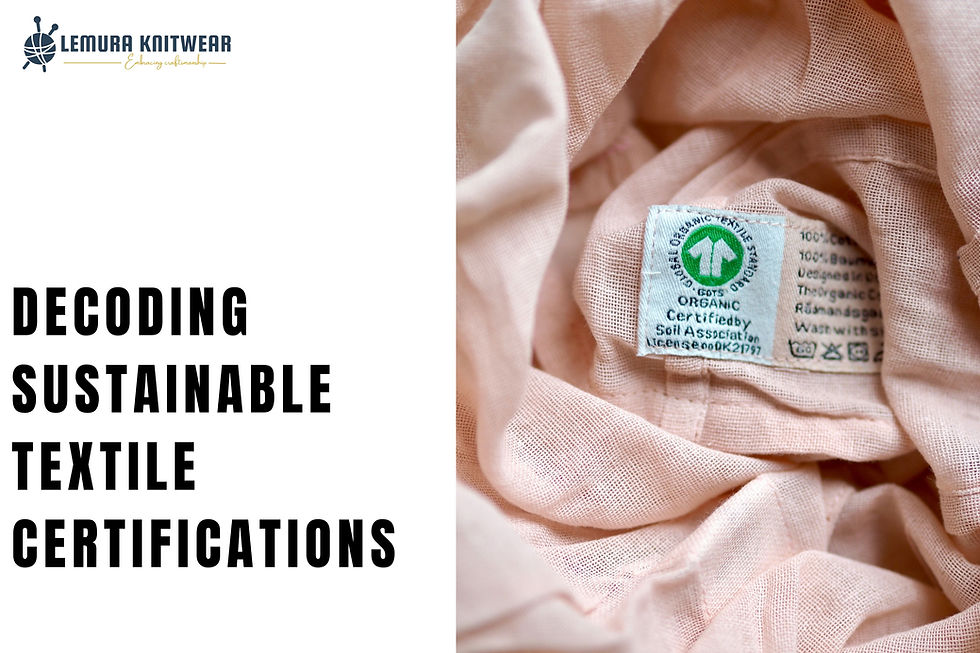
As a new D2C clothing brand, you're likely entering the market with a strong purpose: to create beautiful products that don't harm the planet. The term "sustainable" is a powerful one, but it can be broad and confusing. How do you prove your brand's commitment is genuine and not just "greenwashing"?
The answer lies in sustainable textile certifications. These third-party verifications are the key to building trust with your customers and ensuring your claims are credible. They provide a clear, transparent way to show that your products are made with respect for people and the planet.
This guide will demystify the most important textile certifications, helping you understand what each one means and why it's critical for your eco-conscious brand.
Why Your Brand Needs to Know About Sustainable Textile Certifications
In today's market, consumers are more informed and skeptical than ever. A beautiful website and a promise of "sustainability" are no longer enough. Certifications provide:
Credibility: They offer a verifiable, objective standard that proves your commitment to ethical and sustainable practices.
Clarity: They help you communicate your values to your customers in a clear and concise way, cutting through the noise.
Accountability: They hold your entire supply chain, from the farm to the factory, accountable to a set of strict social and environmental standards.
A Guide to the Most Important Sustainable Textile Certifications
1. GOTS (Global Organic Textile Standard)
This is widely considered the gold standard for organic textiles. GOTS goes far beyond simply certifying that a fiber is organic. It covers the entire supply chain, ensuring:
Organic Content: Your product is made with a minimum of 70% certified organic natural fibers.
Environmental Standards: From processing to dyeing, the entire process is free of toxic chemicals and has a wastewater treatment plan in place.
Social Criteria: Factories must adhere to strict social standards based on the International Labour Organization (ILO), including fair wages and safe working conditions.
Why it matters: GOTS provides a holistic, farm-to-finished-product verification, making it one of the most powerful sustainable certifications you can have.
2. OEKO-TEX® (Standard 100)
While GOTS is about organic production, OEKO-TEX® Standard 100 is about human safety. This is a globally recognized certification that tests textiles for harmful substances.
What it verifies: It ensures that every component of your product—from the thread to the zipper—is free from dangerous levels of hundreds of chemicals.
The Key takeaway: An OEKO-TEX® label is a powerful message to your customers that your products are safe for their skin and health.
Tip: Look for the OEKO-TEX® "Made in Green" label, which adds an extra layer of transparency by allowing consumers to trace the product's origin and see which factories were involved in production.
3. Fair Trade Certified
This certification focuses on the people behind your products. It's a symbol of your commitment to ethical labor practices and empowers workers in developing countries.
What it verifies: It ensures that producers and workers receive fair wages, have safe working conditions, and are part of a transparent supply chain.
Why it matters: It connects your purchasing decisions directly to a positive impact on workers' lives, making it a critical choice for any brand committed to social responsibility.
4. GRS (Global Recycled Standard)
For brands that are committed to using recycled materials, the GRS is a must-have.
What it verifies: It ensures that a product contains a minimum of 20% recycled content and provides a robust chain of custody from the recycler to the final product.
The Key takeaway: This certification is a powerful tool to prevent greenwashing around recycled materials and proves your product is genuinely contributing to a circular economy.
Beyond the Label: How to Find an Ethical Manufacturer
While certifications are vital, they are only part of the puzzle. The true sustainability of your brand is also determined by your manufacturing partner.
At Lemura Knitwear, we are dedicated to helping D2C brands build a truly sustainable and transparent supply chain. Our expertise in sourcing and production means we can:
Source Certified Yarns: We can assist you in finding and using yarns that have the specific sustainable certifications you want to build your brand around.
Provide Manufacturing Transparency: We are committed to ethical production practices and are happy to share details about our factory and processes.
Support Your Journey: We help you navigate the complexities of certifications and sustainable production, so you can focus on building a brand you can be proud of.
Conclusion
Building a sustainable brand is a journey of continuous improvement, and the first step is making informed decisions. By understanding and utilizing these sustainable textile certifications, you can build a credible, ethical, and trustworthy brand that resonates with today’s conscious consumers.
Ready to build your brand on a foundation of integrity and sustainability? Contact us today to discuss your vision and see how we can help you turn your mission into a tangible, certified product.


Comments